
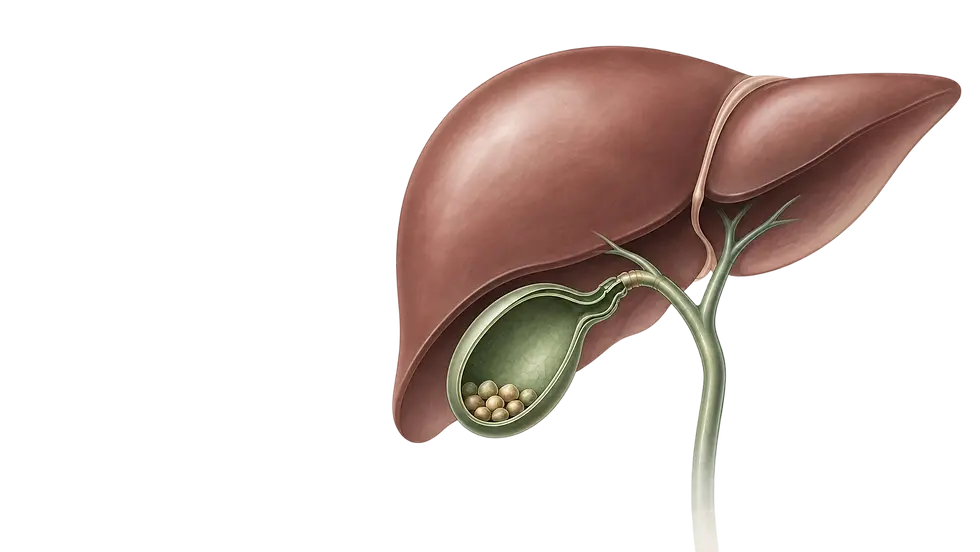
Gallstones & Gallbladder Surgery
Expert care for gallstones, inflammation, and laparoscopic procedures by Dr. Delgado
What are gallstones?
Gallstones are small, hardened pieces of digestive fluid that form in the gallbladder. Finding them on an ultrasound does not always mean you need surgery, as many people have "silent" stones that never cause issues.
What symptoms can gallstones cause?
Common signs include pain in the upper right or middle abdomen, often after eating. This discomfort can spread to the back or shoulder, and may include nausea. Vague indigestion, however, is not always caused by gallstones themselves.
What can an ultrasound tell us?
An ultrasound is the best way to see gallstones and check for inflammation. While the scan identifies the stones, your specific symptoms and medical history are the most important factors in deciding the right treatment plan.
Do all gallstones need surgery?
No, not all gallstones require an operation. If stones aren't causing pain or complications, we often just monitor them. Surgery is generally only recommended when they become symptomatic or lead to health risks like infections.
When may laparoscopic cholecystectomy be recommended?
Laparoscopic cholecystectomy is a minimally invasive surgery to remove the gallbladder through tiny incisions using a specialized camera. This procedure may be suggested if you have recurring pain, inflammation (cholecystitis), or other related complications. However, every patient is unique; we only consider surgery after a thorough discussion of your health, test results, and the potential benefits versus the risks. Our goal is to ensure that surgery is the right choice for your lifestyle and long-term recovery.

I have gallstones on ultrasound but no pain. Do I need surgery?
Usually, no. Gallstones that don't cause symptoms are called "asymptomatic" and often don't require treatment. We typically recommend a policy of watchful waiting, only intervening if you begin to experience pain or discomfort.

Can gallstones disappear on their own?
Gallstones almost never dissolve or go away without medical intervention. While they can remain harmless for years, if they begin causing pain, they will likely continue to do so until treated.

What happens during laparoscopic gallbladder surgery?
While you are asleep under general anesthesia, I use small incisions to insert tools and a camera. The gallbladder is carefully detached and removed through a tiny opening near your navel.

What does gallbladder pain usually feel like?
Often called biliary colic, this pain is usually a steady or sharp ache in the upper abdomen. It often occurs after a heavy meal and can feel like it is traveling to your back or right shoulder blade.

How do you decide whether I need my gallbladder removed?
We make this decision together after a full evaluation. I look at how often you feel pain, the severity of your symptoms, your ultrasound results, and whether the benefits of surgery outweigh any potential risks.

Can I live normally without a gallbladder?
Absolutely. The gallbladder only stores bile; it doesn't produce it. Once it is removed, bile flows directly to your intestine. Most people return to a normal diet and life quite quickly.
Ultrasound Evaluation & Second Opinions
Confirming your diagnosis with expert review provides clarity for your care journey. We ensure your imaging findings are accurately correlated with your clinical symptoms.
Professional review of gallbladder scan results
Clinical correlation with symptoms
Guidance on surgical vs. observation paths
Urgent warning signs
Please seek immediate medical care if you experience severe, unrelenting abdominal pain, a high fever, yellowing of the skin or eyes (jaundice), or persistent vomiting. These symptoms can indicate a serious blockage or infection that requires urgent attention. If you feel your condition is life-threatening, go to the nearest Emergency Department immediately.
Seeing a surgeon does not necessarily mean you need surgery.
A consultation is simply a conversation to explore your options. We will review your health together to decide what treatment—if any—is right for you.